Recommendation: I loved this so much I sent my parents a copy
Where to read: Somewhere noone will notice the incongruity between near constant giggling and the rather sombre title
Read with: Your end-of-the-world beverage of choice – I might go an espresso martini
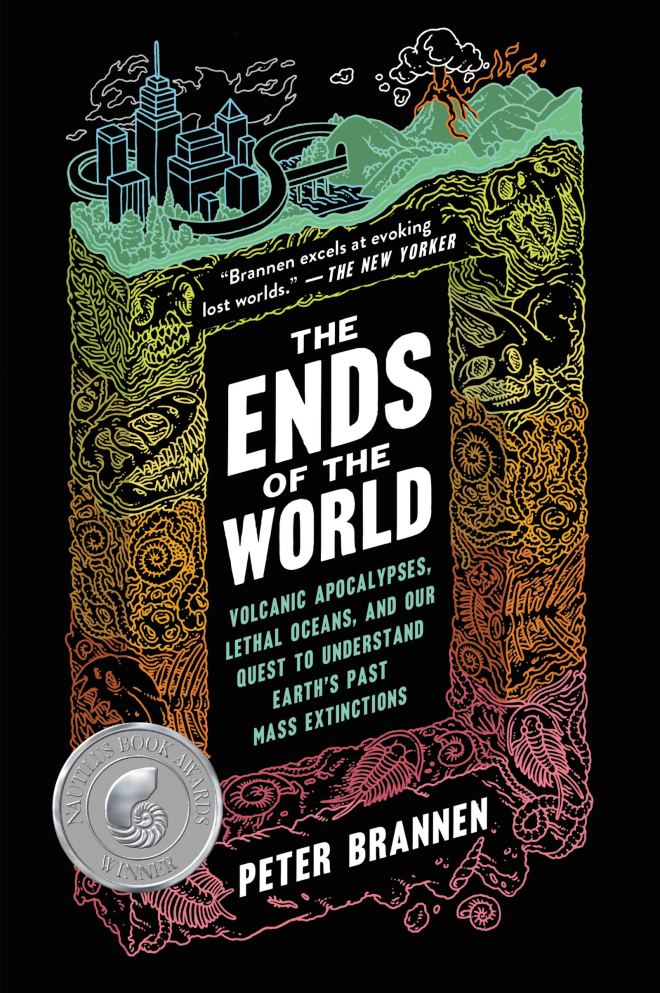
In brief: Peter Brannen is a phenomenal writer. The Ends of the World is clear and accessible, funny in the right places and manages to communicate areas of disagreement in the scientific community without baffling a lay reader. To sum up, Robert Frost was right about both fire and ice. It is also an excellent primer on the concept of the Anthropocene and the role of humanity in driving species to extinction (spoiler alert, we started some time ago).
Like so much on my reading list, this purchase was inspired by something in The Atlantic, in this case a couple of fabulous articles by science journalist Peter Brannen. It just so happens he has recently written a book about mass extinctions. Because I am predictable, I bought it and then, much less predictably, I actually read it.
There have been, to date, five mass extinctions, the underlying causes of which Brannen explores and seeks to explain although, unsurprisingly, there is still significant debate about some of the science. He writes with wit and humour and adds just enough beef to keep it interesting (for example, a proponent of the meteor hypothesis famously said ‘I don’t like to say bad things about palaeontologists, but they’re really not very good scientists. They’re more like stamp collectors’). More chilling, however, are Brannen’s frequent reminders that the phenomena which seem to have driven past mass extinctions look an awful lot like what humanity is doing to the planet right now. This foreshadowing pays off in the final chapters, which focus on the Anthropocene and sixth mass extinction.
This later part of the book is particularly interesting because Brannen has himself been something of a sceptic previously. This scepticism came not from a denial that we are doing horrendous damage to the planet but a sense that in the sweep of deep time, humanity was a comparatively minor event. Unfortunately, his scepticism is not surviving our continuing environmental vandalism.
You should, of course, read the book because it is wonderful, but a general summary of each extinction event is below.
End-Ordovician Mass Extinction
Mortality rate – 85% of living species. Probable cause – the Appalachians and the ice age from Hell
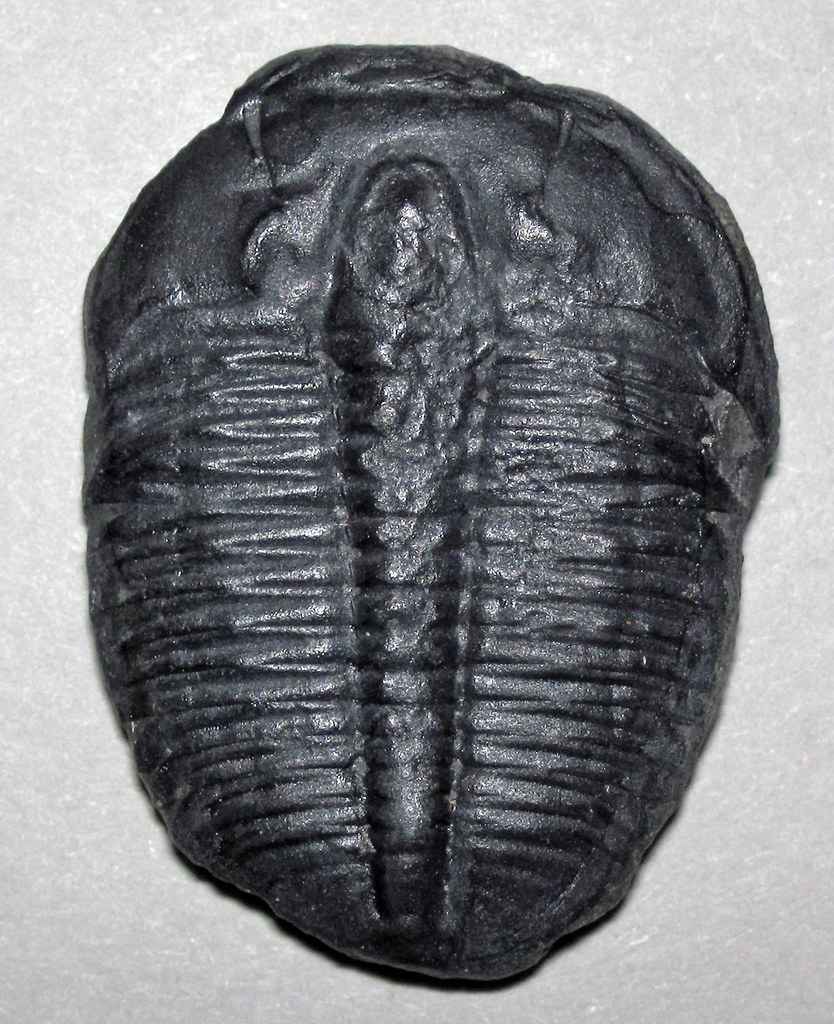
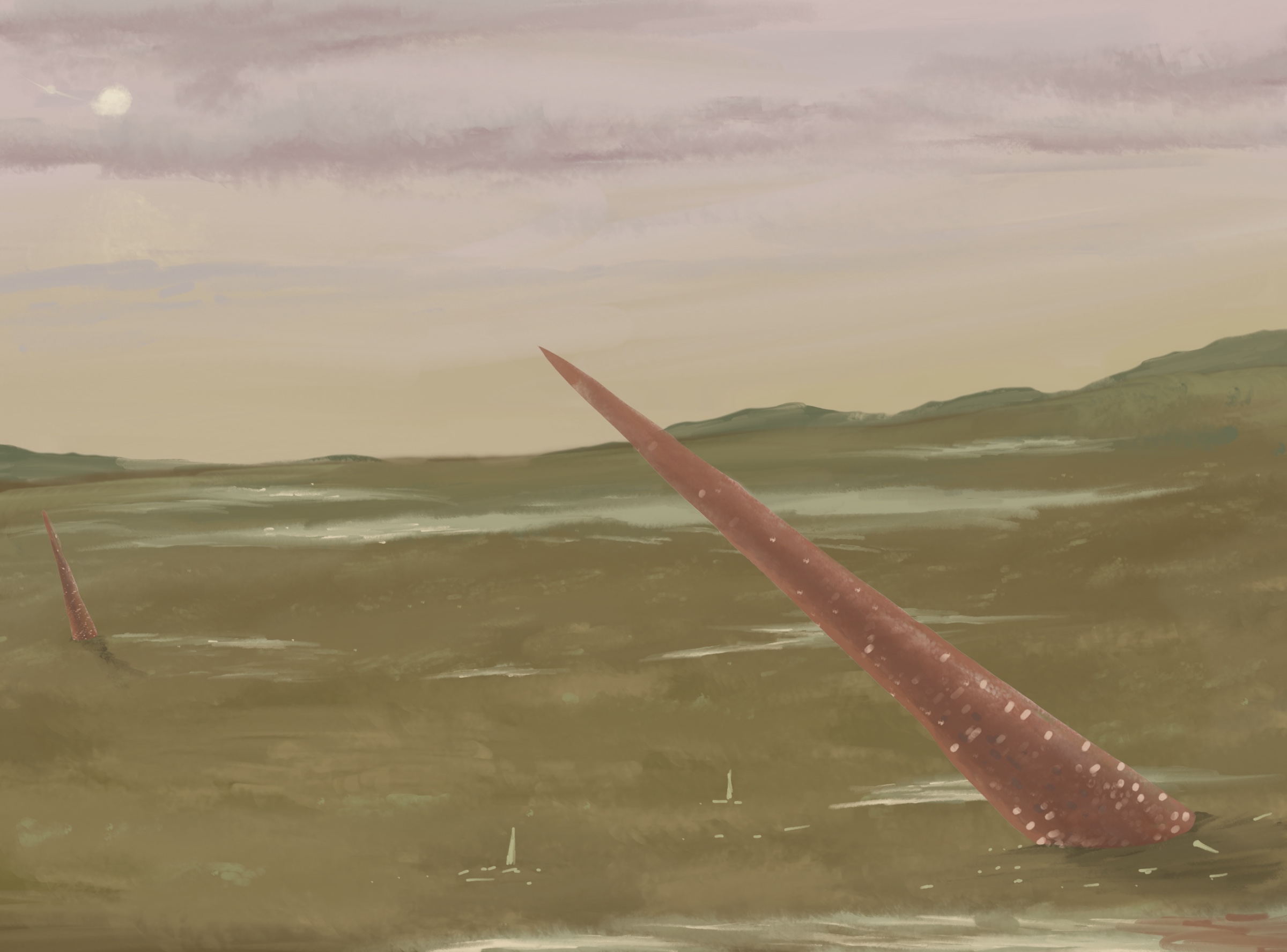
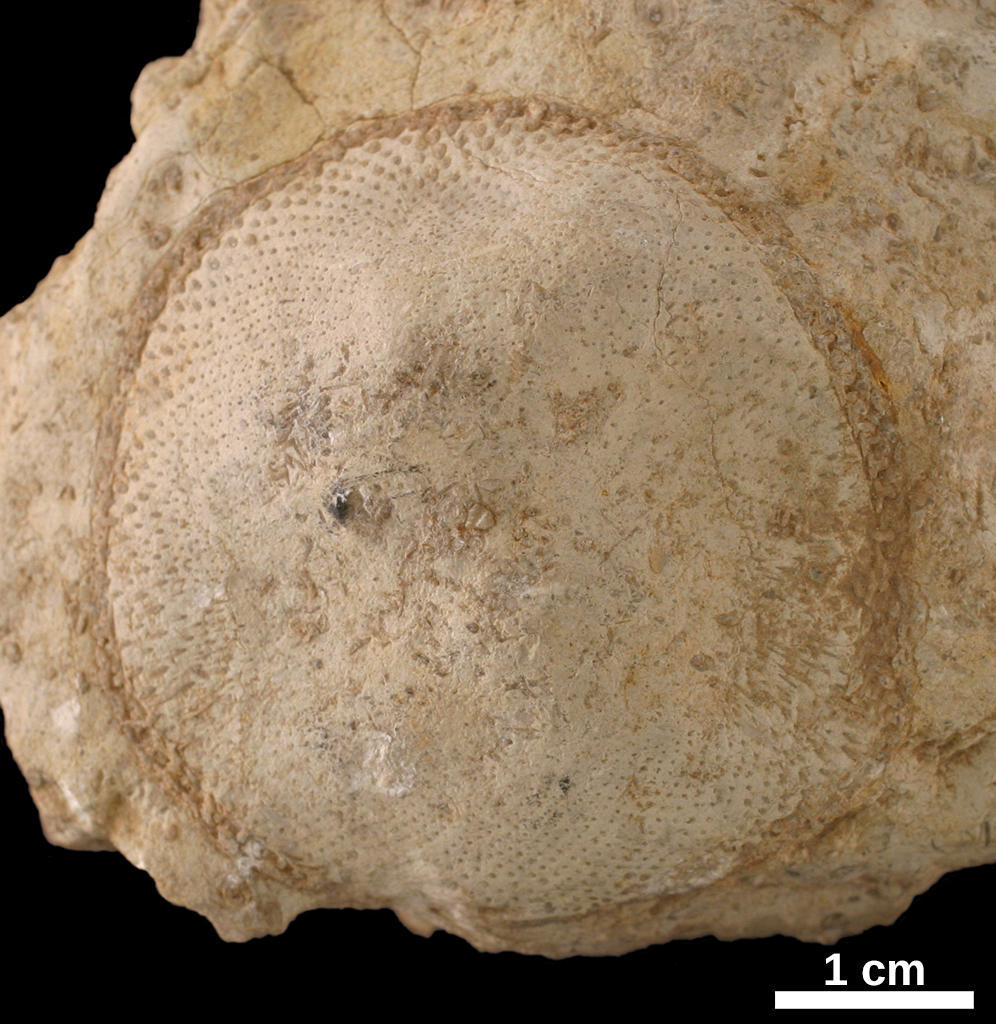
445 million years ago, the seas were full of trilobites and cephalopods and all sorts of weird and wacky life. Things were going along swimmingly (pun intended) until the Appalachian mountains, then a giant volcanic island chain, chomped their way across the ocean and smashed into the North American crust, shoving up a massive mountain range and spewing out huge amounts of carbon. That all came back down in the form of acid rain, weathering the giant volcanic mountains and washing the carbon into the ocean, where it ended up as limestone.
This would have been fine, except there was a very large amount of mountain being weathered very quickly so, once the volcanoes calmed down, there was way more carbon coming down than going up. The climate cooled, a tipping point was hit, glaciers exploded from the poles, sea levels plummeted and the world went to Hell in a hand basket. This was bad enough but the planet then warmed up precipitously, delivering the coup de grâce to the species that had managed to cope with the cold and it was RIP to these fellows:
Late Devonian Mass Extinction
Mortality rate – 70% of living species. Probable cause – plants??
The Late Devonian extinction is interesting in that it does not seem to be one event, more a set of extinction pulses spread out over 25 million years, the two main pulses being the Kellwasser event (≈ 374 million years ago) and the Hangenberg event (≈ 359 million years ago). The mostly likely explanation for the Hangenberg event is the explosion of plant life on land, which led to a vast increase of organic matter in the oceans, which led to giant algae blooms suffocating all other life in these vast dead zones. The combination of plants on land and algae in the ocean also sucked huge amounts of carbon dioxide out of the atmosphere so the planet got very cold and the glaciers had another go at killing everything. There is some evidence that plants also caused the Kellwasser event but some experts suggest that volcanism in repeat-offenders Russia and Siberia may be to blame. Others suggest that wild swings between warming and cooling were the trigger but more research is required.
The other interesting point Brannen makes is that, along with mass extinction, the late Devonian saw a loss of biodiversity as the formation of the super-continent Pangaea and periodic sea level rises merged once-niche habitats. A small number of particularly enterprising species took advantage of these opportunities, crowding out competitors and (probably) contributing to the extinction rate.
End-Permian Mass Extinction aka THE GREAT DYING
Mortality rate – 90% – 96% of living species. Probable cause – Russian volcanoes, horrendous amounts of CO2
As Brannen has written elsewhere:
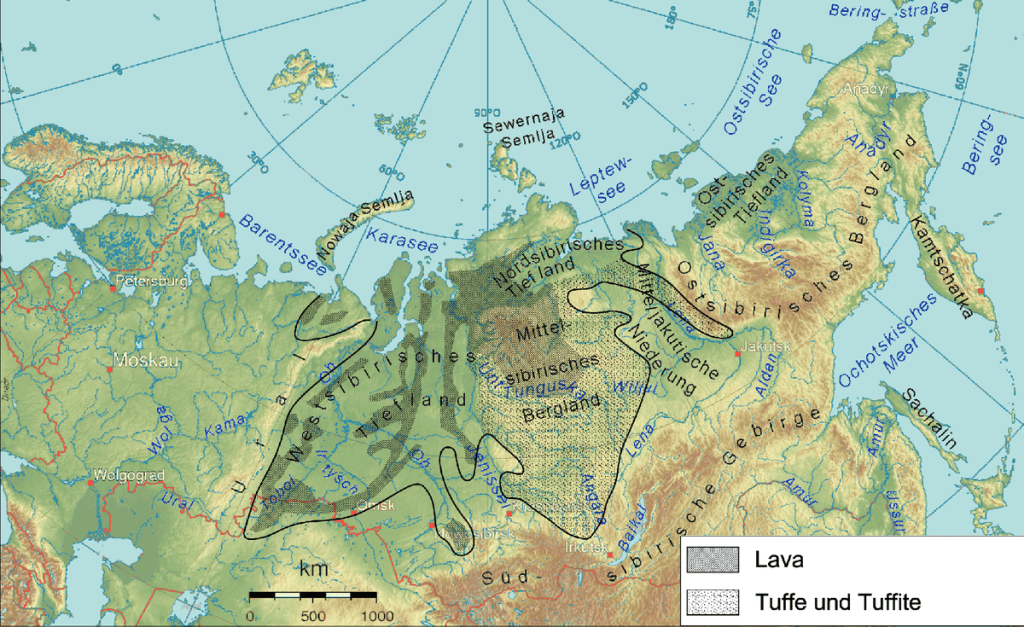
about 252 million years ago, a rich and wonderful world was annihilated in the worst mass extinction ever: the end-Permian, a catastrophe with no close competitor in Earth’s history. Volcanoes of a truly preposterous scale erupted in Siberia over many thousands of years, loosing all manner of chaos on the world. Rounding up, everything died.
The Siberian Traps were disastrously large by themselves but what they were sitting on made it infinitely worse – as the volcanoes erupted, the lava ate through the crust and ignited underlying beds of carbonate rocks (coal, basically), hurling preposterous amounts of carbon dioxide and other greenhouse gasses into the atmosphere. And as humanity is discovering, huge increases in atmospheric greenhouse gasses can really wreck the joint.
As if this were not enough, according to some theories, the Siberian Traps eruptions also triggered increasing anoxia (lack of oxygen) in the oceans and possibly stimulated the growth of bacteria which churned out hydrogen sulfide, destroying the ozone layer and poisoning plant life, which otherwise might have thrived with higher carbon dioxide levels. Also, there might have been a meteor…
In any event, the combined effect of this clusterfuck was a dramatic and sudden increase in ocean temperatures that killed basically everything in the sea.
End-Triassic Mass Extinction
Mortality rate – 70% – 75%% of living species. Probable cause – American(ish) volcanoes, just for something different
About 20 million years after the end of basically everything, it absolutely pissed down for a couple of million years.
The rain worked wonders, the result being that by about 201 million years ago, the planet had managed to recover enough that there was a whole new crop of species to get absolutely pummelled by yet another set of insane volcanic eruptions. Once again, vast quantities of of carbon dioxide and other greenhouse gases were pumped into the atmosphere. Ominously, there is some suggestion that the time scale and quantities are comparable to what humanity is currently doing so that’s … not concerning at all.
End-Cretaceous Mass Extinction
Mortality rate – 75% of living species. Probable cause – giant space rock
The end-Cretaceous Mass Extinction is easily the most famous of the mass extinctions, not because it is the worst but because it wiped out the non-avian dinosaurs and everyone has a dinosaur phase at some stage (and if you haven’t, what is wrong with you). It killed a lot of other things too, but T.rex gets all the attention. Also, you cannot get more dramatic or attention grabbing than a catastrophic meteor strike.
The bizarre thing about this notoriety is that before the 1980s, no one had the foggiest idea what caused such a catastrophe. As Brennan notes, tongue firmly in cheek, proposed culprits included:
disease, nutritional problems, parasites, internecine fighting, imbalance of hormonal and endocrine systems, slipped vertebral disks, racial senility, mammals preying on dinosaur eggs, temperature-induced changes in the sex ratios of embryos, the small size of dinosaur brains (and consequent stupidity) … suicidal psychoses … death by AIDS from outer space and an epidemic of terminal constipation from ingesting the recently flourishing flowering plants.
Fortunately, the mystery has been probably solved by the accidental brilliance of Luis Alvarez (physicist) and his son Walter Alvarez (geologist). They were examining the relatively fossil-free layer between the Cretaceous and the Palogene and wanted to measure how long that period might have lasted. To work it out, they sent samples to be tested for iridium, reasoning there is a fairly steady but small rate of meteor impacts over time – hence, if there is a reasonable amount of iridium in the rock layer, it represents a long period, but if there is a small amount, it represents a short period. However, when the results came back, there was almost 100 times what they had expected, suggesting a huge impact. Dutch scientist Jan Smit discovered this around the same time but the Alvarez lads published first and therefore got all the credit (by which I mean citations).
They also found themselves at the centre of a hugely controversial, acrimonious debate, probably not helped by Alvarez Sr’s entertainingly bitchy comments about stamp collectors (see above) or an academic rival who he thought ‘had been knocked out of the ball game and had just disappeared, because nobody invites him to conferences anymore’. In the early 1990s, the Chicxulub crater in the Yucatán Peninsula had been identified as the relevant crater and the theory is now widely accepted. More recent studies have uncovered evidence of megatsunamis, firestorms (although there is controversy about their scale) and vast amounts of aerosols ejected into the atmosphere which may have plunged the earth into a years long cold spell.
There are alternative theories (other than space AIDs), most prominently that the end Cretaceous extinction was caused, like most of the others, by catastrophic volcanism, this time from the Deccan Traps in India. These are, terrifyingly, still erupting in the Reunion Islands and are responsible for the Maldives, Seychelles and Mauritius.
End-Pleistocene Mass Extinction
Mortality rate – TBD but probably really bad. Probable cause – your car
Brannen started as something of an Anthropocene sceptic so the inclusion of this chapter on the havoc we are currently wrecking on our ourselves and the rest of the Earth is, shall we say, a bad sign. Much ink has been spilled debating the Anthropocene and whether our effects on the planet are likely to be distinct enough to leave a mark on the fossil record. Unfortunately, however, the longer we continue to vandalise the place the more likely that becomes. Even worse from a mass extinction perspective, the end-Pleistocene mass extinction will show up on the fossil record as having started ≈ 50,000 years ago when humans started wiping out the megafauna (probably, this is quite controversial). Since then, habitat destruction, pollution and overhunting have continued to cause species loss.
As the astute reader will have realised over the course of the book, however, species go extinct all the time, sometimes quickly and sometimes at a fairly steady background rate. The best way to cause a mass extinction event, however, is to pump a shit tonne of carbon dioxide and other greenhouse gases into the atmosphere very very quickly (in geological time). Unfortunately for us, and a really concerning percentage of life on earth, pumping a shit tonne of carbon dioxide into the atmosphere is exactly what we are doing. If we continue as we are, we have a good chance of exterminating not only the passenger pigeons and the dodo, but >75% of living species.
In the words of Taylor Swift, ‘that’s a real fucking legacy to leave’.


Hi there, I really enjoy reading your blog! I was wondering whether you’d consider joining the Reedsy Discovery book review community — I think we could potentially be a good fit. At Reedsy Discovery, we spotlight gems of the indie publishing world, with passionate reviewers who decide which books to recommend to our community. If you think you might like to join us, here’s our application form: https://reedsy.com/discovery/reviewers/apply?source=cf. I’m also happy to chat more via email! You can reach me at ethan@reedsy.com.
All the best,
Ethan, Professional Page Turner @ Discovery
LikeLike