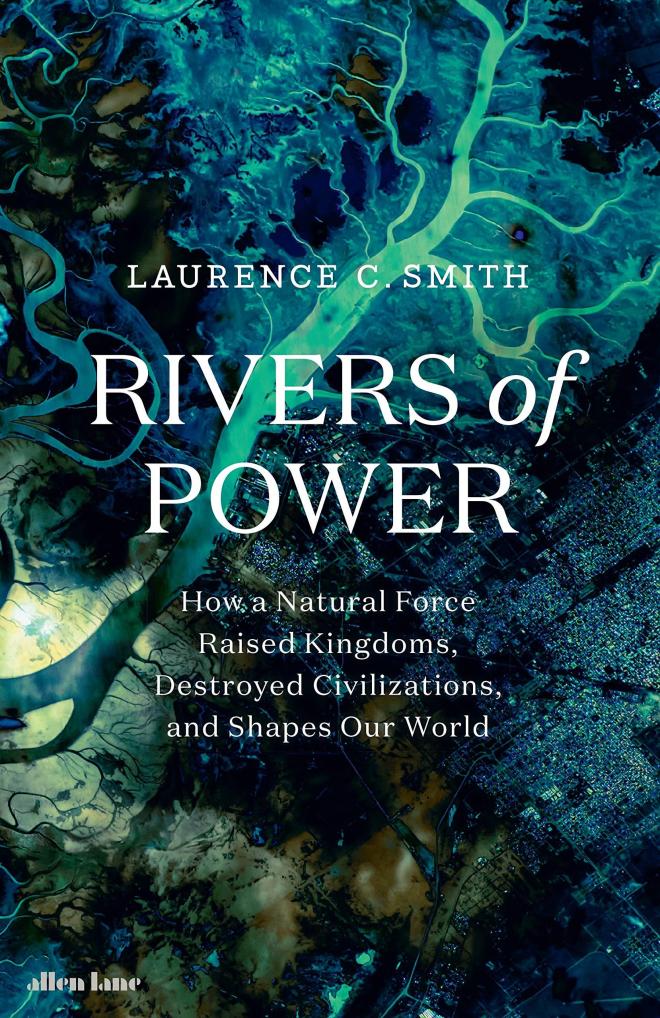
Recommendation: Don’t bother
Where to read: Find a riverbank somewhere
Read with: A nice Speyside (literally from the River Spey)
In brief: The cardinal sin here is obviously an incorrect Lord of the Rings reference. However, the larger difficulty is the rambling lack of structure and lack of historical rigor.
Right at the end of the book, Smith summarises the point he is trying to make in Rivers of Power in about two pages. In general terms, his story runs as follows – early humans congregated along rivers, shaping the development of early civilizations as “hydraulic societies” where political power was linked to the ability to construct and maintain elaborate river diversion and irrigation systems. As technology developed, humans pressed rivers into service in new and different ways, including constructing vast dams and canals and fundamentally changing (trashing) the rivers themselves. In more recent years, we have become more aware of pollution and the negative impacts of human river use and are in some instances reversing course, pulling down dams and embarking on large-scale riverside revitalisation programs (particularly in cities).
This is a compelling story, but the problem is that Smith is not a historian, nor is he a journalist or a political scientist. He is an environmental scientist and it shows. His discussions about climate change and current environmental issues with river systems are compelling but his historical analysis is at best half-baked (and rushed) and the political analysis sometimes comes off as frankly naive, particularly as he refers to completion dates and project approvals that have very much not eventuated. Not all books should be written with an eye to the future, but this is so aggressively “2020” a good half of the book is basically obsolete 3 years later.
The other difficultly is Smith’s tendency to meander through anecdotes and factoids he finds interesting. There is a certain fun in this – the idea of rivers as a key instrument of colonialism is an interesting point, for example – but the book really should have been billed as “an eclectic collection of things I find cool about rivers” rather than some kind of historical work about the impact of rivers on human civilization. If that is something that floats your boat (pun intended), you will probably enjoy this. If you want something a little more informative or directed, it is probably a pass.
 Bookshelves & Bourbon